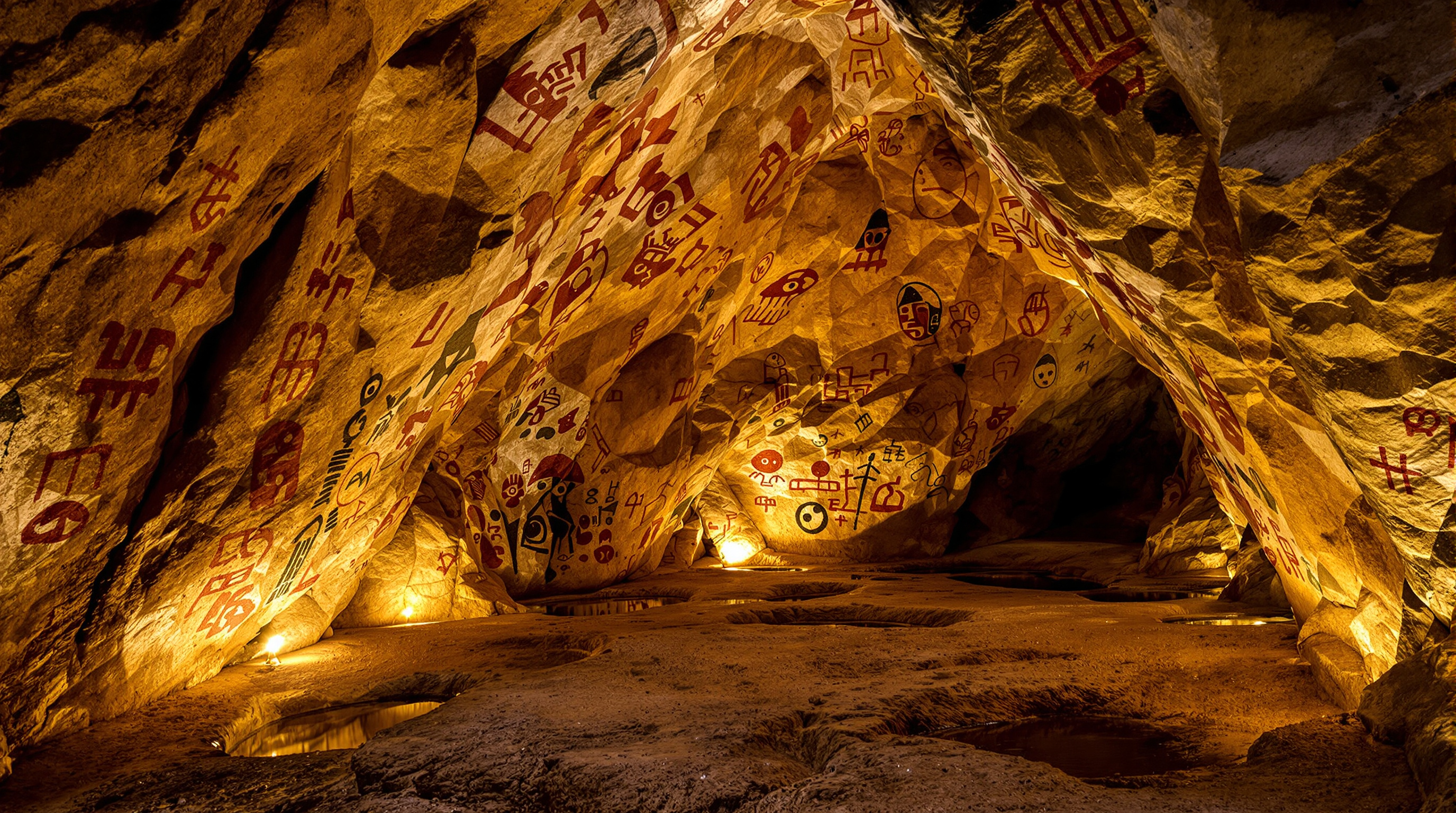
Cuba's cave art tradition is one of the best-kept secrets of Caribbean archaeology. Protected within the island's vast network of limestone karst caves — some of the most extensive in the Americas — prehistoric paintings and engravings document thousands of years of indigenous artistic expression, from the island's earliest inhabitants through the Taíno civilization that Columbus encountered in 1492.
The Cave Environment
Cuba's geology is dominated by limestone karst, a porous rock type that forms dramatic cave systems through the chemical action of groundwater over millions of years. The interior provinces — La Habana, Matanzas, Villa Clara, Sancti Spíritus, and Camagüey — contain thousands of caves, many never fully explored or documented. For Cuba's prehistoric peoples, these caves were places of profound cultural and spiritual significance, chosen as locations for artistic activity because of their association with the underworld, the realm of spirits, and the ancestors.
The physical properties of these cave systems contributed to the remarkable preservation of their art. Stable temperatures, relatively consistent humidity, and protection from wind and rain have allowed pigments and engravings to survive for centuries — and in some cases, millennia. The same conditions that preserved the art also shaped the rituals performed within: darkness, echoes, and the mysterious microclimate of the cave interior reinforced the sense of entering a sacred, liminal space between the living world and the realm of spirits.
The Art
Cuban cave art falls into two primary categories: pictographs (painted images) and petroglyphs (engraved or pecked images). Pictographs are executed primarily in charcoal and red or ochre pigments, with some sites preserving white and black imagery as well. The subject matter ranges from geometric abstractions — dots, lines, spirals, grids — to representational imagery including human and animal figures, faces, and hybrid beings.
The most distinctive imagery consists of large circular or oval faces — sometimes interpreted as depictions of Taíno spiritual beings — found at sites including the Cueva de Ambrosio in Matanzas province. These faces, with their wide eyes and simplified features, are among the most immediately recognizable prehistoric images in the Caribbean. Scholars debate whether they represent cemís (Taíno supernatural entities), ancestral spirits, or shamanic vision imagery experienced during altered states of consciousness induced by ritual tobacco or other substances.
Petroglyphs — images produced by incising, abrading, or pecking the rock surface rather than applying pigment — are found across many of the same cave systems. The techniques vary from fine linear incisions to broad pecked outlines. Petroglyphs tend to favor harder rock surfaces and are often found near cave entrances where natural light permitted more controlled work. Some sites contain both pictograph and petroglyph traditions, suggesting either long periods of occupation and reuse or multiple cultural groups interacting with the same sacred spaces over time.
Research History
Systematic study of Cuban cave art began in the 19th century but accelerated dramatically in the mid-20th century with the development of dedicated Cuban archaeological institutions following the 1959 revolution. Cuban researchers including Antonio Núñez Jiménez produced comprehensive surveys of the island's cave systems and their art, laying the foundation for later scientific analysis. International collaboration in the late 20th and early 21st centuries brought new methodologies — including radiocarbon dating of pigments, digital photogrammetry, and multispectral imaging — to bear on the Cuban corpus.
Contemporary research is coordinated through Cuban national heritage institutions based in Havana. The UNESCO World Heritage Committee has recognized the significance of Cuban cave systems, and ongoing research projects continue to document newly identified sites using non-invasive survey techniques. The island's relative isolation from mass tourism has, paradoxically, helped protect many sites from the visitor pressure that threatens cave art in Europe and elsewhere.
Dating the Cuban corpus remains the field's central unresolved problem. Most pictographs here are executed in carbon black — soot or charcoal — which is, in principle, directly datable, and this is a genuine advantage over the mineral-pigment traditions of mainland South America. In practice the caves complicate matters: high humidity, active carbonate deposition, and the possibility that charcoal was collected as old wood or scavenged from earlier hearths all introduce error that a single measurement cannot detect. The soundest published dates therefore come from panels where several samples were taken from separate figures and cross-checked against stratified deposits on the cave floor. Where only one date exists for a site, it should be read as a hypothesis rather than a fact — a caution that applies rather widely across the Caribbean sequence.
Key Sites
Cuba's most significant cave art sites are distributed across the island's karst zones, with particular concentrations in the western and central provinces:
- Cueva de Ambrosio (Matanzas) — Contains one of the largest concentrations of pictographs in Cuba, with hundreds of individual images including the characteristic large faces. The cave is a protected site with managed visitor access, and its assemblage is considered among the finest prehistoric painted assemblages in the Caribbean.
- Cueva de los Generales / Cueva Numero Uno (La Habana) — Multiple caves in the western province preserve significant pictograph assemblages. The proximity of these sites to the capital has facilitated their study while also increasing the need for visitor management protocols.
- Camagüey Province caves — The interior harbors extensive cave systems with petroglyphs associated with pre-Taíno and Taíno cultures. Several sites in this province remain incompletely documented, and ongoing survey work continues to identify previously unrecorded imagery.
- Pinar del Río cave systems (western Cuba) — The mountainous terrain of the Sierra de los Órganos and Sierra del Rosario contains cave systems associated with some of Cuba's earliest human occupation. Rock art in these western caves reflects the full chronological depth of the island's prehistoric traditions.
Conservation poses significant challenges at Cuban cave art sites. High humidity promotes biological growth — algae, fungi, and bacteria — on painted surfaces, and the same microclimate that preserved pigments for centuries can accelerate deterioration once human visitors alter air circulation patterns. Accessibility risks at some caves, including narrow passages and unstable formations, have historically limited both research and illicit access. Cuban heritage authorities continue to balance public education and tourism with site protection, a challenge shared with cave art custodians worldwide. The International Council on Monuments and Sites (ICOMOS) has documented best practices for cave art conservation that inform current Cuban management approaches.