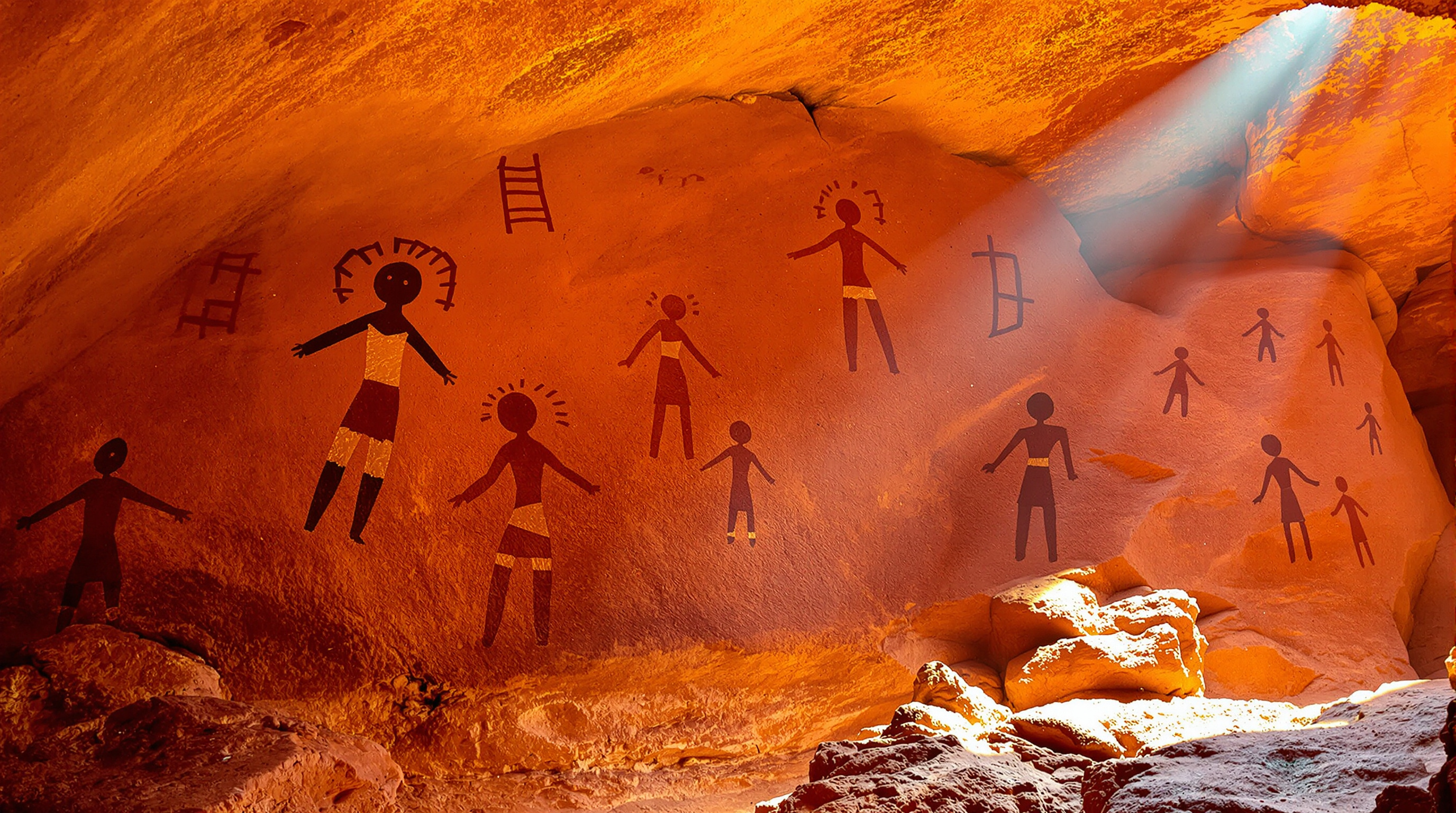
The Americas contain some of the world's most extraordinary concentrations of prehistoric rock art. From the painted shelters of northeastern Brazil to the petroglyphs of the American Southwest and the decorated caves of the Caribbean, these images offer a window into the minds and spiritual lives of the people who created them thousands of years ago.
This section presents illustrated accounts from field research at rock art sites across three major regions: Brazil, Cuba, and North America. These are not peer-reviewed scholarly publications — they are firsthand observations and documentation from the field, shared in the spirit of public education and accessibility.
Brazil: The Nordeste Tradition
Northeastern Brazil contains one of the hemisphere's greatest concentrations of prehistoric rock art. The Nordeste Tradition — a stylistic grouping of painted figures found across Piauí, Bahia, Ceará, Rio Grande do Norte, and adjacent states — represents a pan-regional rock art phenomenon of remarkable antiquity and diversity. Field research across multiple seasons in this region documented sites ranging from small isolated shelters to the massive painted paredões (rock walls) of Serra da Capivara National Park.
Beyond the classic Nordeste sites, research extended into neighboring states: Minas Gerais harbors both Nordeste-style imagery and distinct local traditions, while Tocantins offers a frontier zone where regional traditions overlap. Museum collections in Salvador, Rio de Janeiro, and São Paulo provided crucial comparative material, including pre-Columbian featherwork and indigenous material culture that illuminates the cultural contexts in which rock art was produced.
Explore our in-depth coverage of the Nordeste Tradition and the remarkable Serra da Capivara National Park, a UNESCO World Heritage Site that protects over 800 archaeological sites within its 130,000 hectares of caatinga scrubland.
Cuba: Cave Art of the Caribbean
Cuba possesses a little-known but remarkable tradition of cave art, concentrated in the limestone karst regions that extend across the island's provinces. Field research involved visits to fourteen caves in La Habana, Matanzas, and Camagüey provinces — some accessible only with special permission from Cuban cultural heritage authorities.
The cave art of Cuba, produced largely by the pre-Columbian Taíno and their predecessors, includes pictographs executed in charcoal and red pigment alongside geometric petroglyphs cut into cave walls and stalactite formations. The imagery ranges from simple geometric designs to elaborate anthropomorphic faces that appear to represent spiritual entities from the Taíno cosmological worldview. Conservation in Cuba has progressed significantly in recent decades, with a network of protected cave sites now managed by the Office of the Historian of the City of Havana and the Ministry of Science, Technology, and the Environment.
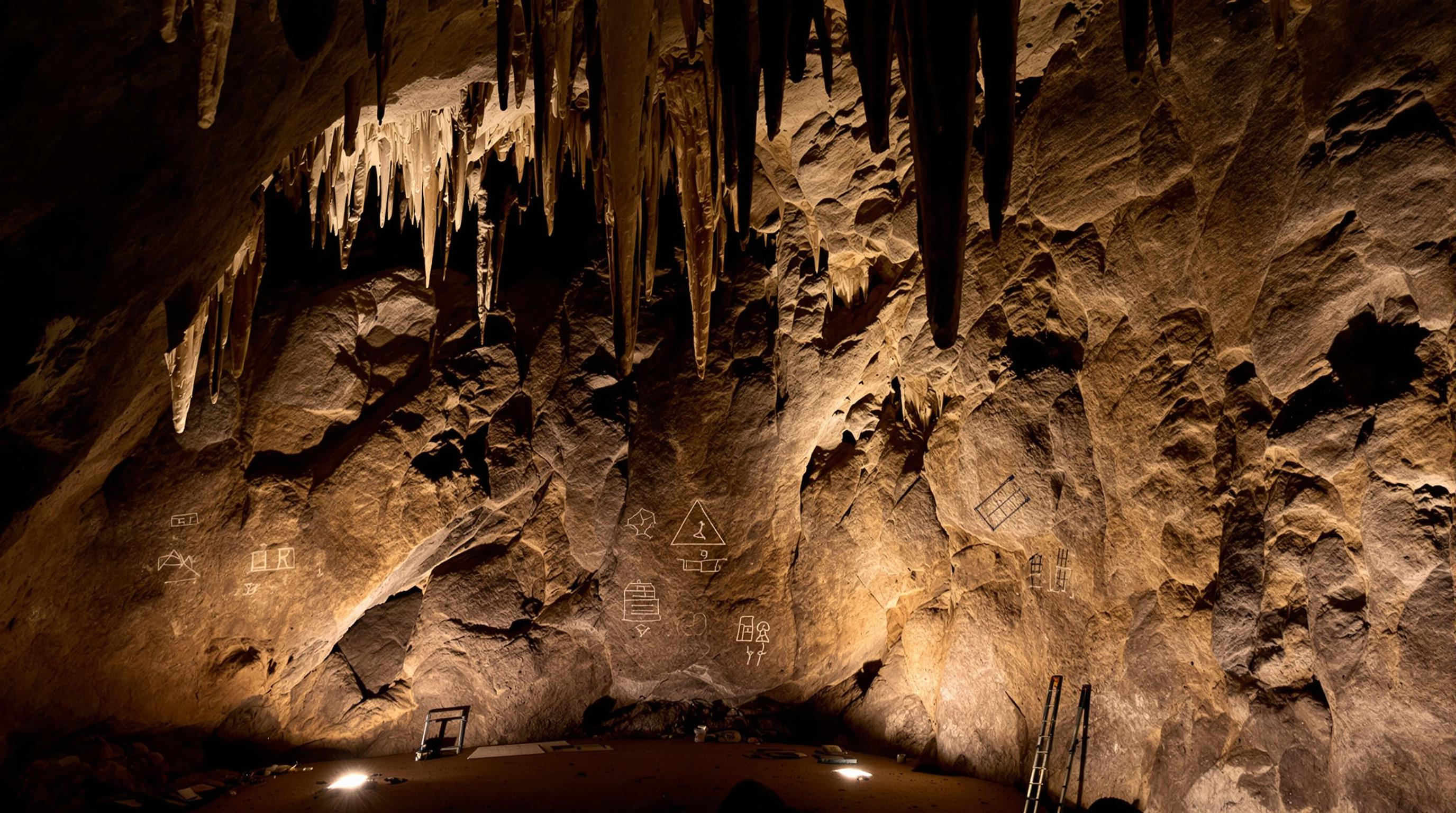
Read more about Cuban cave art — its iconography, conservation, and the sites that preserve it.
North American Petroglyphs and Pictographs
North America's rock art record spans tens of thousands of years and encompasses a dizzying array of regional styles and traditions. Field visits to sites in Virginia, West Virginia, Ohio, Wisconsin, Minnesota, South Dakota, Wyoming, Utah, Illinois, and Georgia documented the remarkable breadth of the continent's prehistoric imagery — from the incised petroglyphs of the Ohio Valley to the bold pictographs of the northern Great Plains and the elaborate painted panels of the Colorado Plateau.
The American Southwest remains the most intensively studied rock art region in North America, with traditions including the haunting Barrier Canyon Style of southern Utah, the vibrant Fremont tradition of the Great Basin, and the historic Ute and Navajo imagery that overlies older panels across the region. The Great Gallery at Horseshoe Canyon — part of Canyonlands National Park — showcases some of the most extraordinary examples of Barrier Canyon Style rock art anywhere on earth: haunting, life-sized anthropomorphic figures that seem to float on the sandstone walls, their hollow eyes gazing across millennia. The National Park Service's Canyonlands resource provides visitor information and background on this extraordinary site.
Delve deeper into our coverage of North American rock art, including site-by-site field notes from the eastern woodlands, the plains, and the canyon country of the Southwest.
Field Research Ethics
Rock art sites are irreplaceable cultural heritage. All field research documented here was conducted with appropriate permits and in accordance with conservation best practices established by national and international heritage authorities. Specific locations of sensitive or unprotected sites are withheld to protect their integrity from vandalism and unregulated visitation.
Readers are encouraged to visit only officially designated sites and to treat all rock art with the utmost respect — never touching, chalking, tracing, or otherwise disturbing the imagery. Even seemingly innocuous contact accelerates deterioration of pigments and stone surfaces that have survived for thousands of years. Photography without flash is generally permitted at open sites; always verify regulations with site managers before visiting.